
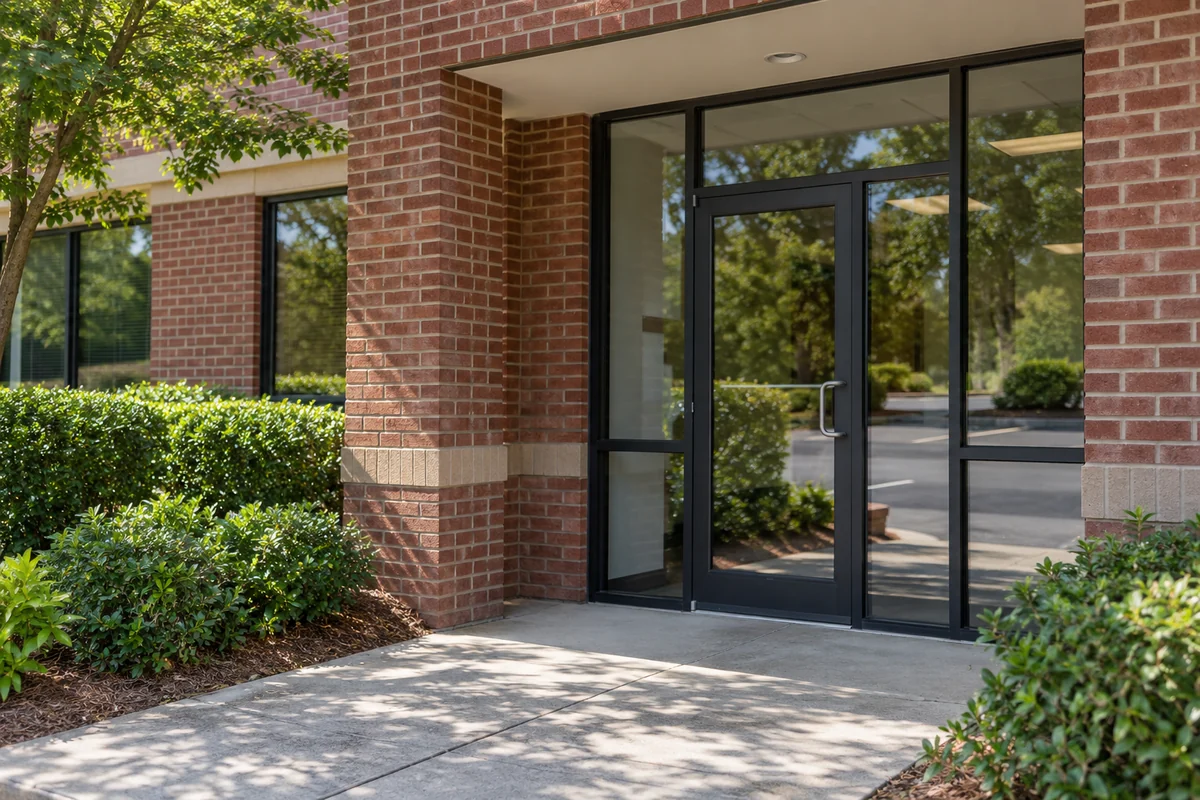
Follow a normal opening
Start with what the person opening the premises actually needs: the correct entrance, a usable key and any agreed contact for a problem. A front-door key and a staff-door key are not interchangeable just because both are on the same ring.
Give each key a private, recognizable label and record who should hold it. Keep that information with the people responsible for the premises. Avoid a label that advertises the full business address if the ring is misplaced.
Check the closing routine as well
A key that opens the door does not by itself show that the door secures properly at closing time. The responsible person should know which entrance is involved and how to report a problem during normal authorized use.
If the handle, latch or key behaves differently, note the symptom before passing the keys on. Our lock repair information helps distinguish a physical operation problem from an uncertain key record. Do not make hardware changes simply to keep a shift handoff moving.
When someone leaves with a key
Identify which key is unreturned and what it operates. Do not assume that another working copy answers the concern about the missing one. The question is whether the current access arrangement is still the one the responsible person wants.
Where changing the working key is appropriate for suitable hardware, rekeying information explains the discussion. Keep decisions with the person authorized to agree to the work, including any property-management involvement.
Keep location details separate
A unit on Veterans Memorial Highway may have a customer entrance and another access point used by staff. When discussing a problem, identify the actual premises and affected door rather than giving only the road or shopping destination.
The commercial lock page covers the details useful for an request. Explain who will be on site, how the entrance is normally used and whether the issue is preventing access or preventing the door from being secured.
A short handoff is enough
Record the keys transferred, the person receiving them and any problem that still needs attention. If another key will arrive later, give that follow-up a named person and agreed next step. Review the list when responsibilities change instead of leaving old entries in place indefinitely.
Keep keys for unchanged doors clearly separate from any new set. When a reported fault is still unresolved, pass on the description as well as the key: which entrance, what happens and who is following it up. The next person should not have to rediscover the same problem at closing time.